United States Prohibition era
Killers of the Flower MoonThe United States Prohibition era was a national ban on alcohol whose effects in Osage County extended well beyond drinking: it helped deepen an already volatile boomtown climate and made poisoned liquor a potential cover for murder. The book places the law in ordinary social life as well as in the wider breakdown of order, showing how a measure meant to suppress alcohol instead furnished new conditions for crime and concealment.
Prohibition in a Boomtown Landscape
By the time Anna Brown brought bootleg whiskey to a gathering at Mollie Burkhart’s home, nationwide Prohibition had been in force for a year. Anna said she needed to finish the flask before the authorities caught her, then offered the guests a drink. Her casual handling of the contraband makes the law tangible: prohibition did not remove liquor from the gathering, but turned a flask of it into an illicit object passed among guests.
The account links the law to a broader transformation in Osage County. Oil wealth had drawn fugitives and desperadoes from across the country, while Prohibition compounded the territory’s feeling of lawlessness by encouraging organized crime. The unwritten codes of the West and traditions that had bound communities were already coming apart; against that weakening social order, the ban added another source of illicit trade and criminal opportunity.
Liquor and the Appearance of Disorder
Anna’s flask also connects the national policy to the boomtown culture around her. After divorcing Oda Brown, she spent increasing amounts of time in places such as Whizbang, an oil-worker town known for its restless nightlife. The book describes her attraction to establishments that looked proper from the outside but concealed rooms stocked with moonshine. In this setting, illegal drinking was not hidden away from social life so much as built into its shadow economy.
The scale of the disorder was not limited to liquor or to local quarrels. The passage describes Osage County as exceptionally chaotic and reports that its oil fortune had exceeded the combined value of the Old West gold rushes. A Justice Department official warned that the Osage Hills sheltered more fugitives than perhaps any other county in the state or any state in the Union. Prohibition therefore appears within a convergence of wealth, flight, and weak community restraints, rather than as an isolated legal controversy.
Toxic Alcohol as Cover
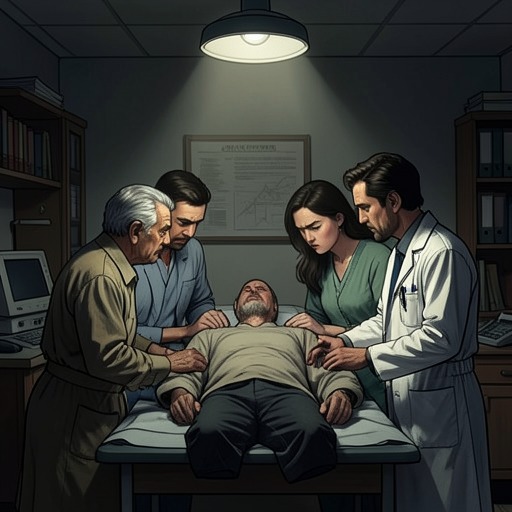
The era’s most consequential connection to the murders lies in the danger of bootleg liquor itself. Accidental deaths from wood alcohol and other toxic brews were common enough that a killer could spike someone’s moonshine without necessarily arousing suspicion. The symptoms of poisons could resemble ordinary illness, and in Osage County the lack of trained forensic coroners and crime laboratories made poisoning particularly difficult to detect. Prohibition did not itself establish that any particular death was caused this way; it created a context in which toxic liquor could make a deliberate poisoning look like another fatal consequence of illicit drinking.